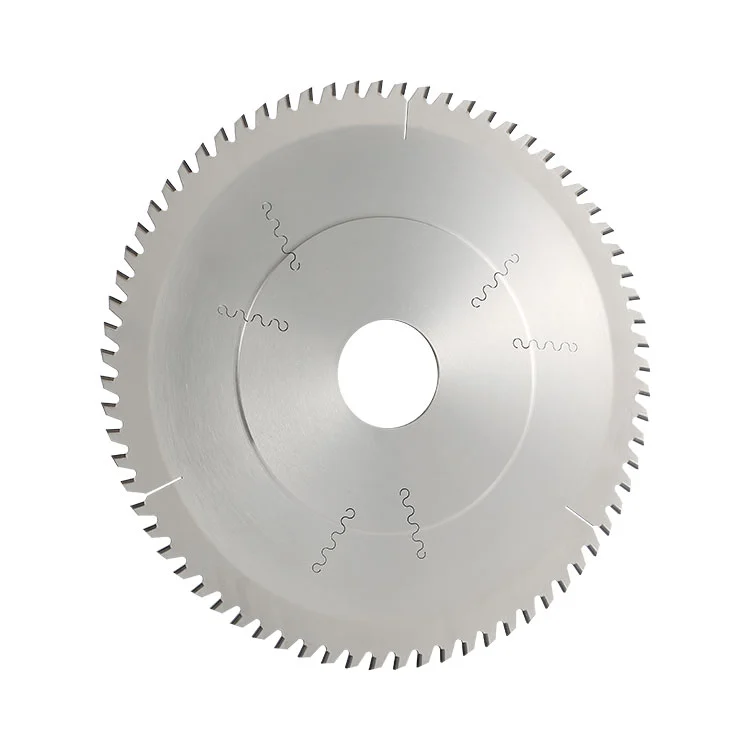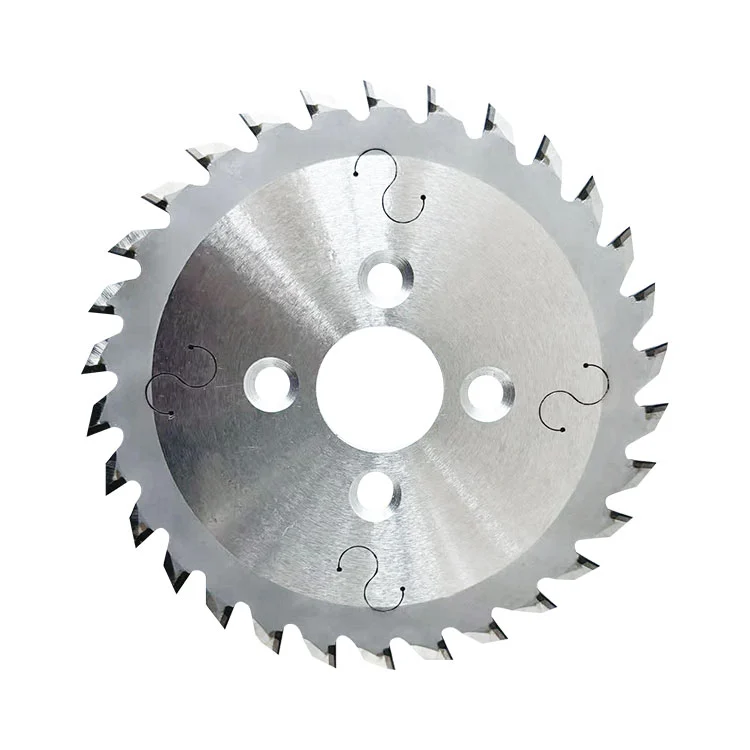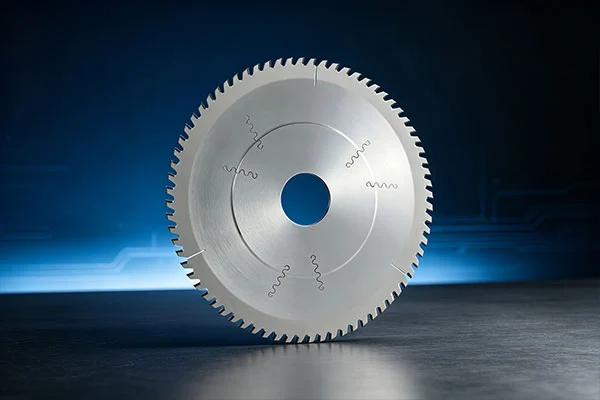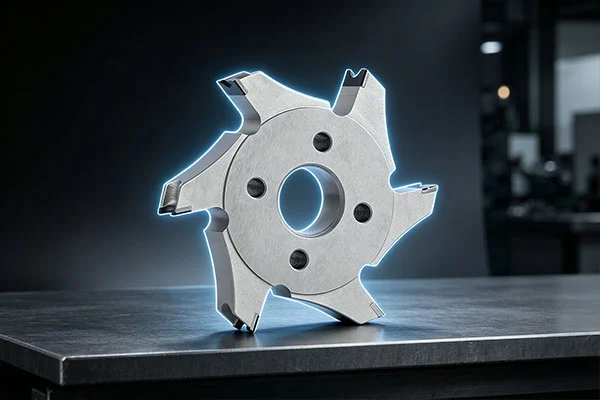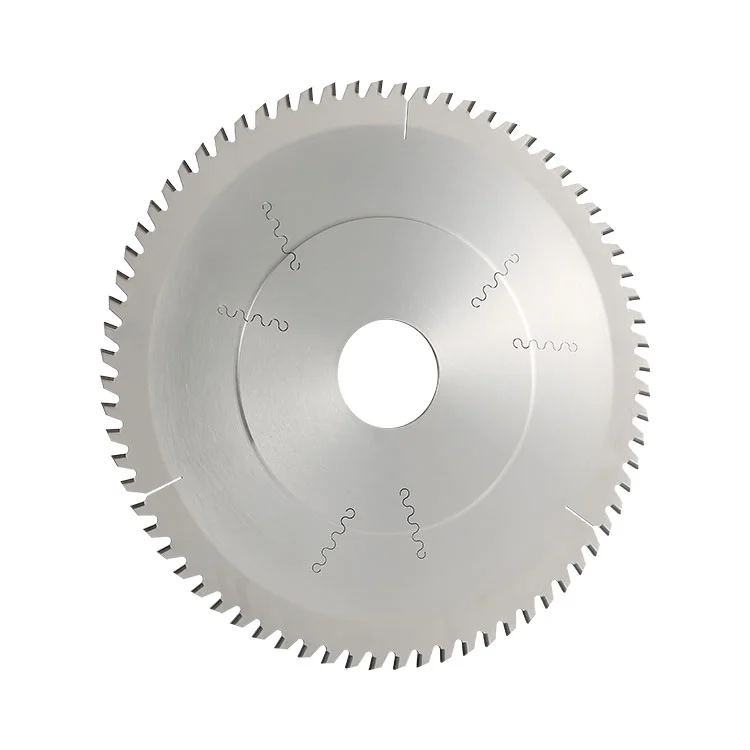
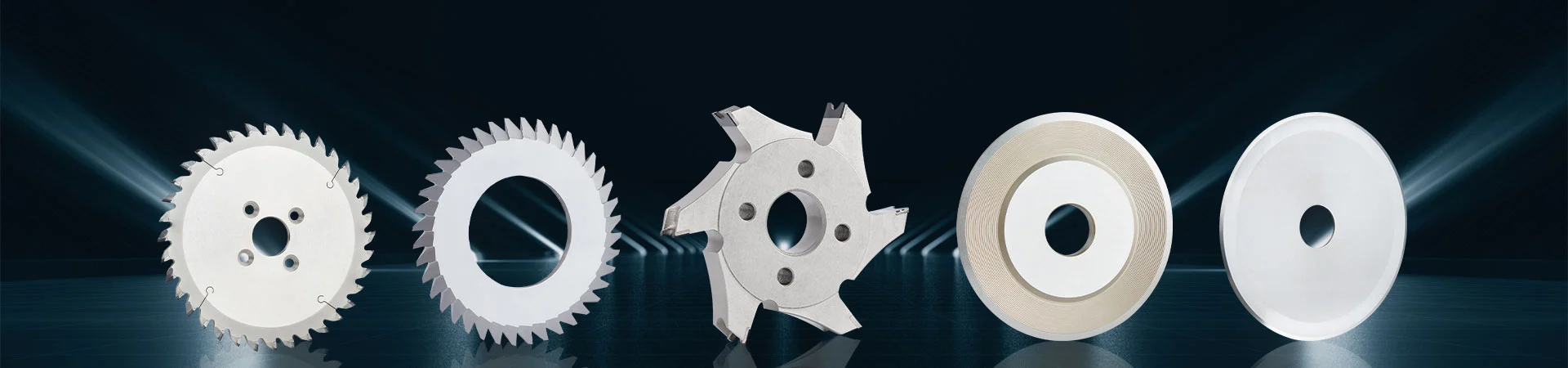
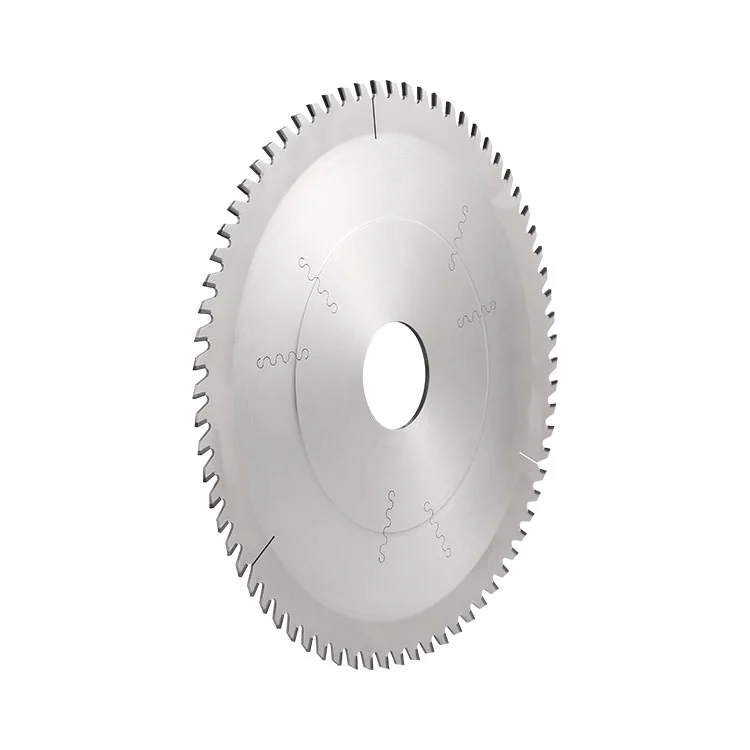
Winway is a professional manufacturer and supplier of PCD Saw Blade for PCB. This blade adopts a high-strength alloy-steel substrate, with PCD polycrystalline diamond segments brazed onto the tooth positions as cutting edges. Available tooth profiles include alternate-left-right teeth, trapezoidal-flat teeth and other options, making it suitable for panel-sizing and cutting FR-4 copper-clad laminates, high-glass-fiber boards, aluminum-base boards and other PCB materials.
Compared with ordinary tungsten-steel saw blades, PCD diamond cutting edge brings superior wear resistance. Alloy-steel substrate achieves excellent dynamic balance with low vibration during high-speed cutting.
It produces a clean cutting section in mass-volume cutting and reduces glass-fiber burrs and copper-foil burrs. Its service life is far longer than tungsten-steel saw blades, which makes it the preferred tool for mass-volume panel-sizing in PCB factories.
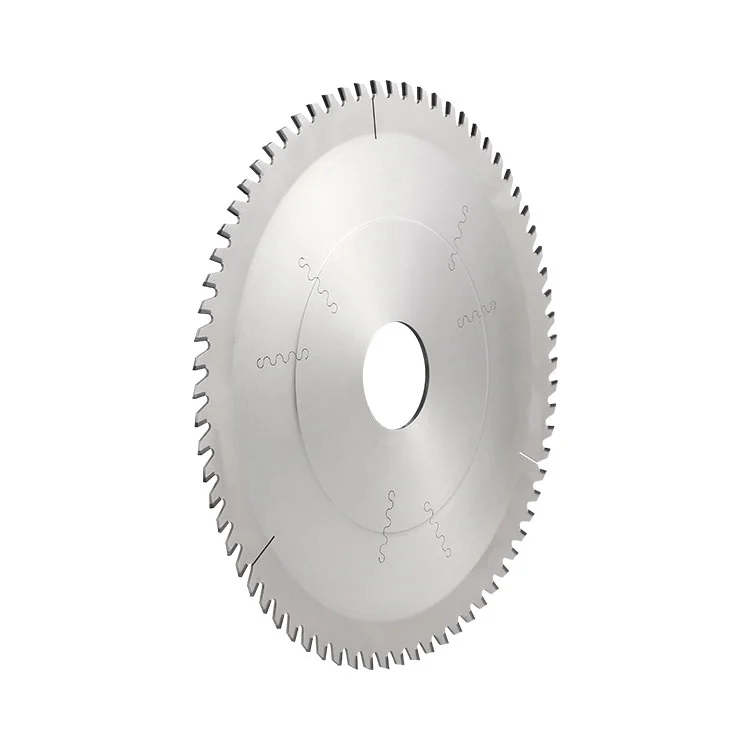
PCD Saw Blade for PCB (PCD panel-sizing saw blade) is a specialized PCB cutting tool constructed of an alloy-steel substrate with brazed polycrystalline-diamond (PCD) segments as cutting teeth. Installed on PCB panel-sizing machines, it cuts large raw base boards into finished dimensions for subsequent production processes.
The spindle of the panel-sizing machine drives the diamond saw blade to rotate at high speed. Its cutting process involves the following stages:
The machine spindle drives the blade to rotate at the required operating speed, bringing the PCD cutting teeth into contact with the PCB workpiece.
High-speed rotating PCD cutting teeth cut the resin, glass-fiber cloth and copper foil of the workpiece through a combined shearing and grinding effect.
Different tooth profiles perform their respective cutting tasks. Alternate-left-right teeth realize bidirectional cutting, while trapezoidal-flat teeth make preliminary grooving first and then finish trimming the cross-section to lower board internal stress.
The process completes PCB panel sizing and separation, obtains a flat cutting cross-section, reduces delamination, fuzzing and edge chipping, and helps maintain cutting dimensional accuracy.
The following table presents the available standard specifications for this PCD Saw Blade for PCB.
| Ordinal | Outer Diameter (mm) | Body Thickness (mm) | Bore (mm) | Number of Teeth Z | Tooth Profile |
|---|---|---|---|---|---|
| 01 | 255 | 2.5 | 25.4 | 60/72 | Alternate-left-right / Trapezoidal-flat |
| 02 | 305 | 2.4/2.6/4.0 | 25.4 / 31.75 | 54/60/72 | Alternate-left-right / Trapezoidal-flat |
| 03 | 325 | 3.6/4.0 | 25.4/30/60 | 72/84 | Alternate-left-right / Trapezoidal-flat |
| 04 | 350 | 3.2/3.6/4.0 | 25.4/30/60 | 48/54/72/84 | Alternate-left-right / Trapezoidal-flat |
Customization: Custom outer diameter, inner hole, thickness, tooth quantity and tooth profile are available according to machine and PCB production requirements.
The blade is designed for the following PCB panel-sizing and cutting applications:
Mass-volume panel-sizing cutting for ordinary FR-4 copper-clad laminates.
Cutting production of high-TG, high-glass-fiber difficult-to-machine PCB boards.
Panel-sizing and depaneling for aluminum-base PCB.
Cutting of halogen-free boards and composite substrate boards.
Automatic panel-sizing machine continuous mass-production lines.
The following working conditions are not suitable for this blade or may increase the risk of cutting-edge damage:
Solid Metal Cutting: Cutting solid thick metal, stainless steel and high-hardness metal workpieces; PCD teeth are prone to chipping.
Hard Impurities: Workpieces mixed with large hard metallic impurities and coarse particles, which will cause impact damage to PCD cutting teeth.
Insufficient Dust Removal: Working conditions without effective dust-blowing and chip-removal devices; accumulated glass-fiber dust accelerates tooth wear.
Excessive Equipment Vibration: Equipment with excessive spindle run-out or a loose flange plate; heavy vibration easily causes PCD tooth chipping.
Heavy-Load Dry Cutting: Long-time heavy-load dry-cutting without blowing cooling; high temperature may lead to PCD segment debrazing and substrate deformation.
Clean the spindle flange and positioning surface, install the saw blade in the correct rotation direction, and fasten the flange nuts properly. Control saw-blade run-out at ≤0.05 mm. Check for cracks or tooth chipping before mounting.
The arrow mark on the saw blade must be consistent with the spindle rotation direction. Reverse mounting will cause serious tooth damage.
The PCB raw board shall be firmly pressed without warpage or slipping. Workpiece vibration is a main cause of burrs and uneven cutting dimensions.
Match reasonable spindle speed and feed rate according to board thickness and material. Avoid excessive cutting depth in a single pass, and keep the blowing and chip-removal system running continuously.
The following table summarizes common cutting problems, possible causes and corresponding solutions.
| Abnormal Phenomenon | Root Cause | Solution |
|---|---|---|
| Board edge fuzzing and glass-fiber burr | Dull cutting teeth, excessive feed rate, insufficient chip-blowing, loose workpiece, large spindle run-out | Reduce feed speed, enhance air blowing, re-press workpiece, inspect spindle, return for re-grinding if teeth are worn |
| Unstable cutting dimension | Large saw-blade run-out, loose flange, workpiece slipping | Re-install and lock saw blade, calibrate spindle, improve board clamping |
| PCD tooth chipping / tooth loss | Wrong rotation direction, board mixed with hard impurities, heavy vibration, over-depth single-pass cutting | Check rotation direction, inspect raw-board quality, eliminate equipment vibration, optimize cutting parameters |
| PCD segment debrazing and falling-off | Long-time dry-cutting, overload cutting, excessive cutting heat | Enhance chip-blowing cooling, lower feed rate, reduce cutting load |
| Board burning and resin scorch | Mismatched spindle-feed parameter, poor chip evacuation | Adjust speed-feed matching, strengthen blowing to take away hot chips |
Store the saw blade individually in a special blade case, avoiding collision and falling. Protect PCD teeth from hard impact and keep the alloy-steel substrate away from moisture to prevent rust.
Visually inspect the blade for cracks, tooth chipping and substrate deformation. Clean the flange and positioning hole before installation.
Keep the chip-blowing device working at all times. Periodically check cutting section quality and tooth wear condition.
Remove resin and glass-fiber residues from the tooth gaps with a soft brush or low-pressure air gun. Never scrape PCD teeth with hard tools.
When cutting quality declines obviously, send the blade back to the factory for professional re-grinding, if the service is available. Do not grind the blade by yourself.
A1: PCD diamond cutting teeth have superior wear resistance, and the alloy-steel substrate provides good high-speed dynamic balance. Its service life is several times longer than tungsten-steel saw blades. It keeps stable cutting quality in mass-volume cutting with fewer glass-fiber and copper-foil burrs, reduces frequent tool changing and improves production efficiency.
A2: Common options are alternate-left-right teeth and trapezoidal-flat (high-low) teeth. Select according to board material and thickness; custom tooth profiles are available on request.
A3: The PCD Saw Blade for PCB is suitable for panel-sizing and cutting of PCB materials such as ordinary FR-4 copper-clad laminates, high-glass-fiber boards and aluminum-base boards.
A4: Service life depends on the glass-fiber content of the board, spindle speed, feed speed and chip-blowing effect. Under equal working conditions, it performs much better than tungsten-steel saw blades; high-glass-fiber material will accelerate cutting-tooth wear.
A5: Not necessarily. Causes may include worn cutting teeth, excessive feed rate, insufficient chip-blowing, loose board clamping and large spindle run-out. For poor performance with a new tool, check equipment parameters and clamping status first. Re-grinding may be needed after cutting-edge wear.
Address
Building 17, Yonglida Tiansheng Industrial Park, No. 50 Gangkou Avenue, Wanjiang District, Dongguan City, Guangdong Province, China
Tel