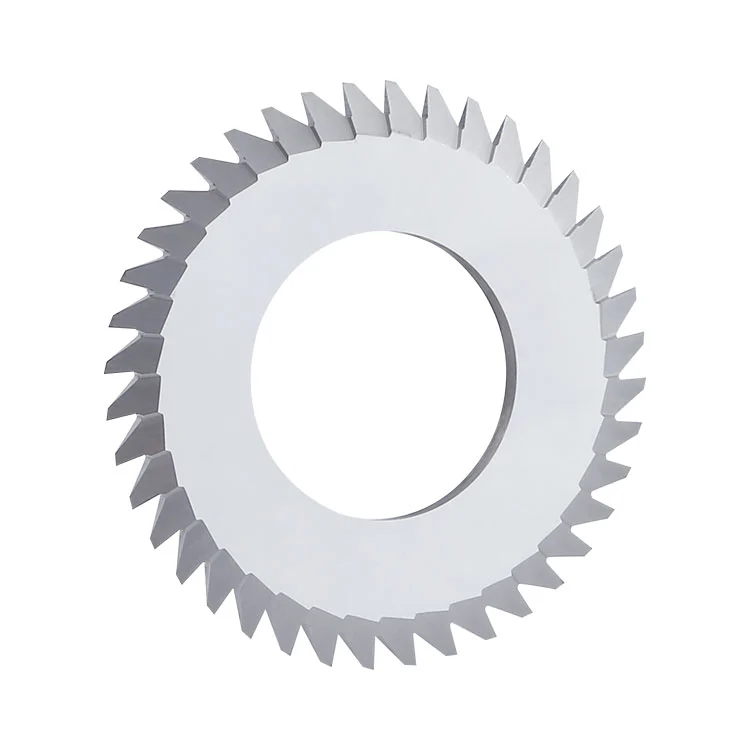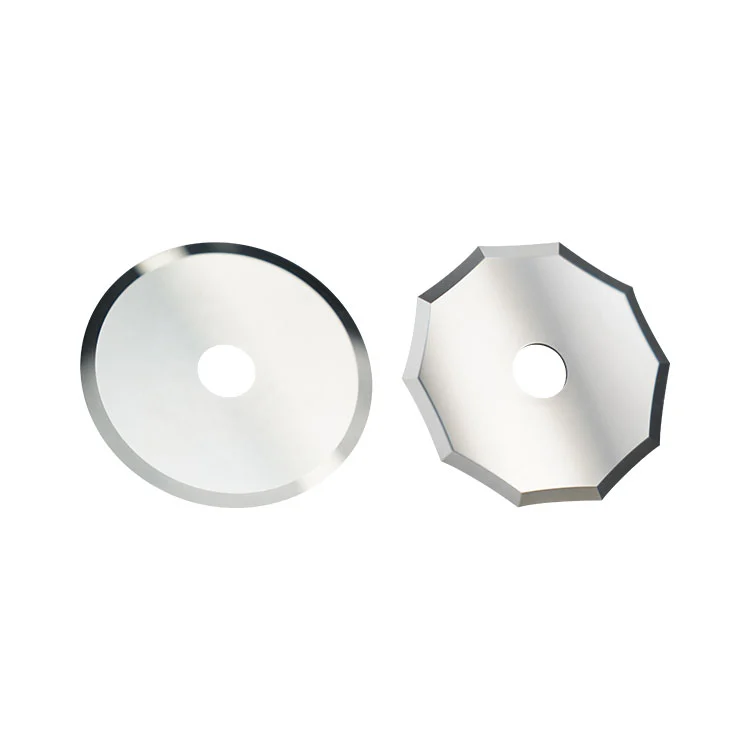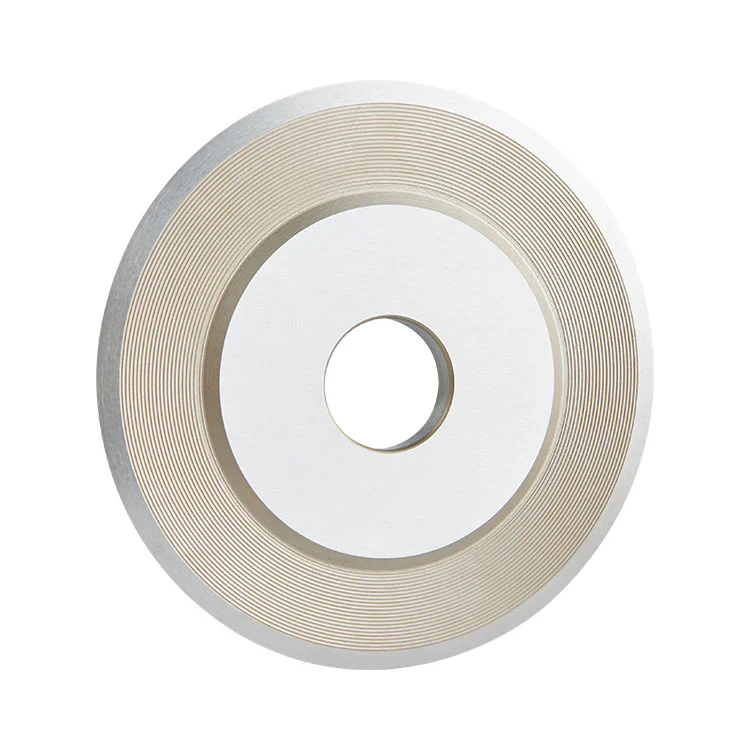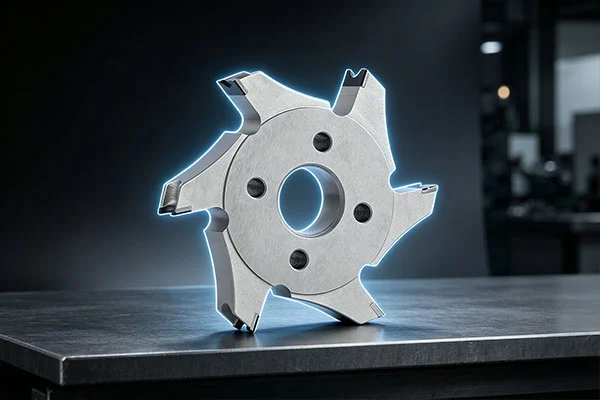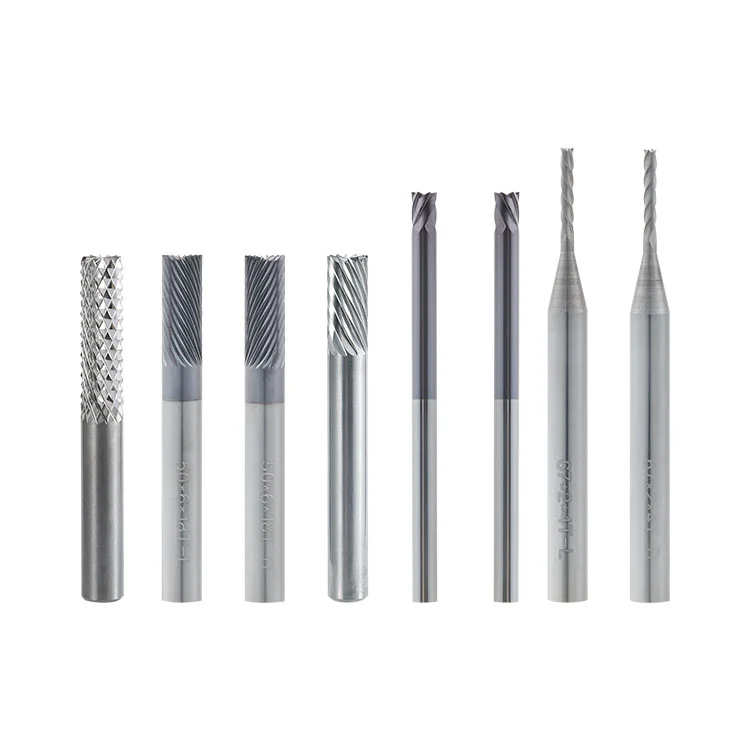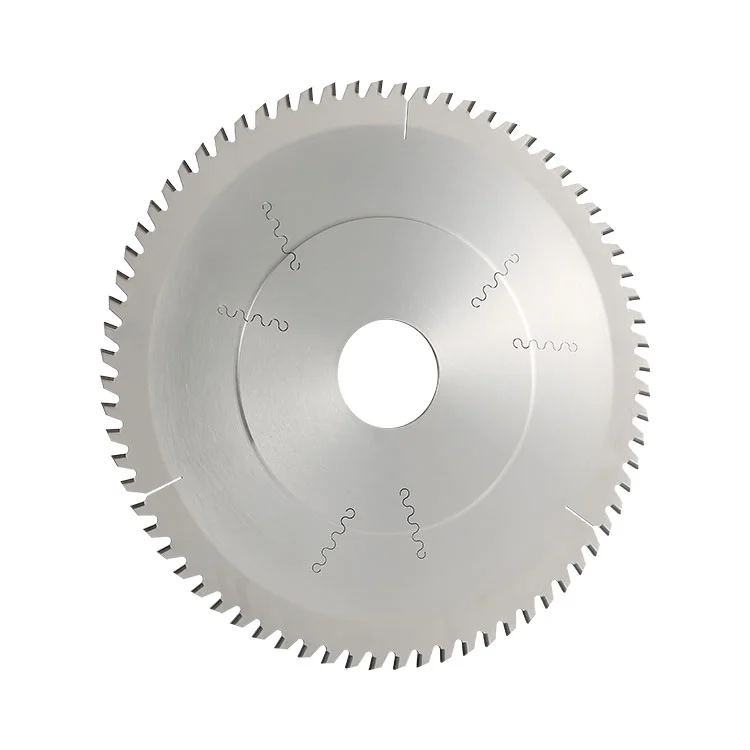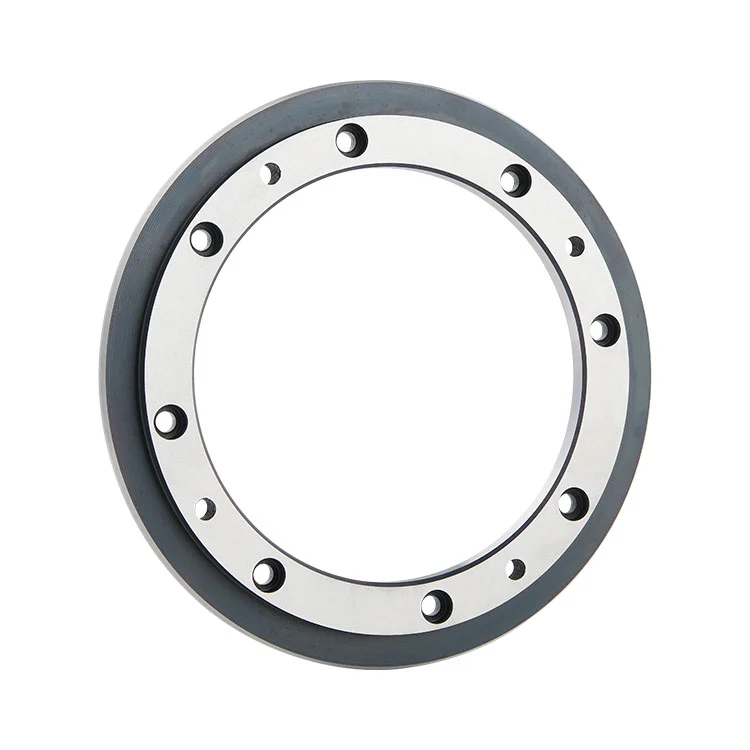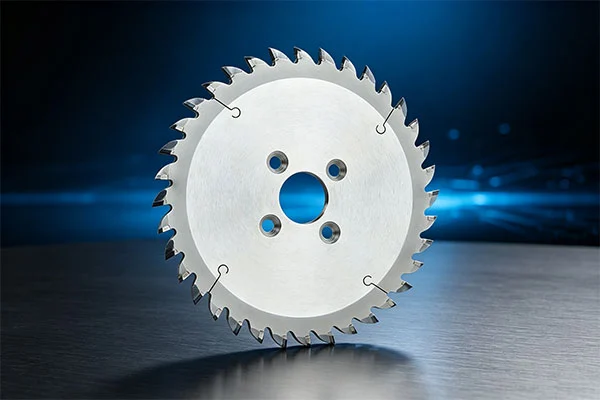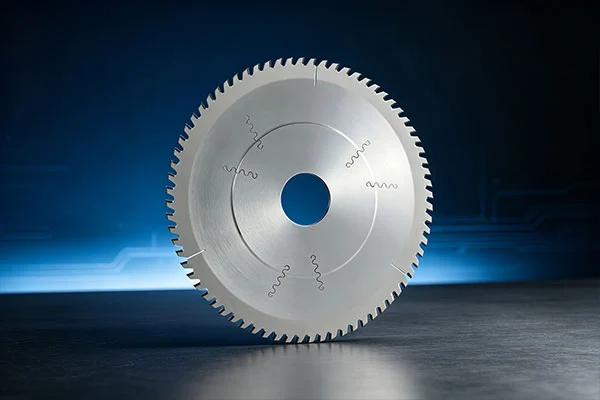
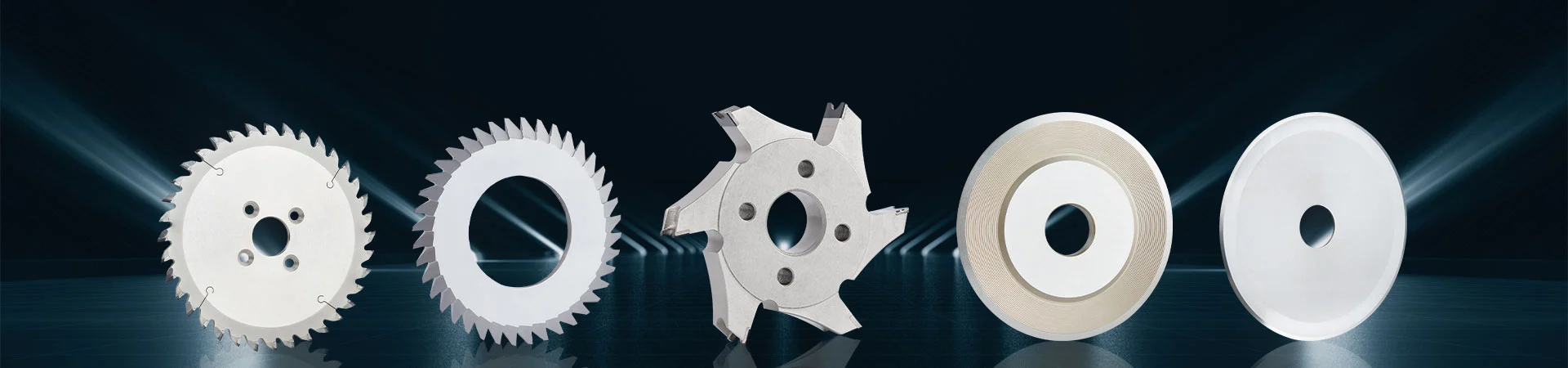
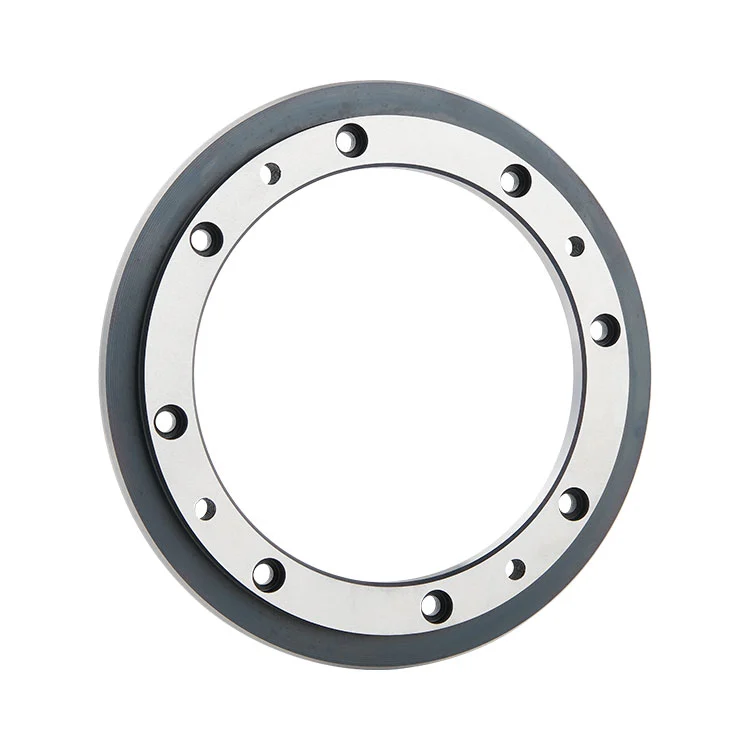
Winway is a professional manufacturer and supplier of Carbide PCB Slitting Cutter, a precision circular knife designed for longitudinal slitting of copper-clad laminate (CCL) and PP prepreg in the PCB industry. This Alloy Slitting Cutter is manufactured from SKD11 steel with a precisely ground cutting edge. It works with upper and lower knives to perform high-speed rolling cuts on PCB base materials. The cutting section is flat and smooth, helping reduce base material delamination and burrs. Outer diameter, inner diameter and thickness can be customized according to equipment and production capacity requirements, making it suitable for continuous mass slitting operations in PCB base material factories.
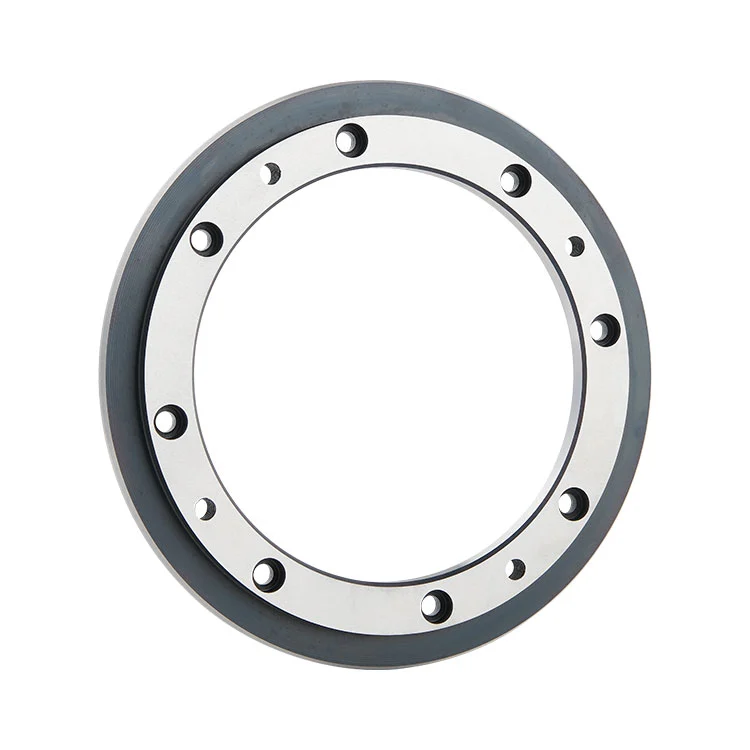
Carbide PCB Slitting Cutter, also known as an SKD11 Alloy Slitting Cutter, is a circular knife matched with PCB base material cutting equipment. It is installed in pairs on the cutter shaft of a slitting machine. Through the rolling cutting action of upper and lower knives, it performs longitudinal slitting of CCL and PP prepreg. This specialized PCB Slitting Knife is mainly used in copper-clad laminate production and PCB upstream material processing.
Material: SKD11 Tool Steel
SKD11 is a high-carbon, high-chromium alloy tool steel containing Cr, Mo and V alloy elements. After precision forging, vacuum quenching and tempering treatment, it features high hardness, high wear resistance and good dimensional stability. Low internal stress after heat treatment helps prevent deformation during long-term high-speed rolling cutting. Meanwhile, it retains proper matrix toughness to withstand impact from base material joints and reduce the risk of chipping. These properties make SKD11 suitable for continuous rolling cutting of PCB base materials such as CCL and PP.
Hardness Test: The hardness of the cutting edge after heat treatment can reach HRC60~62, with small hardness deviation within the same batch and uniform hardness.
End Runout Test: The end runout of finished products is strictly controlled to ensure slitting width accuracy without uneven cutting width.
Cutting Edge Durability Test: Under standard working conditions for slitting CCL and PP, the SKD11 Slitting Cutter demonstrates excellent wear resistance, a long cutting-edge passivation cycle and a small increase in burrs on the cutting section after extended operation.
Impact Resistance Test: It can withstand impact from base material joints and plate thickness fluctuations, reducing the risk of chipping and corner breakage.
Flatness Test: After heat treatment and multiple precision grinding processes, blade plane deformation remains low, supporting stable operation during high-speed slitting.
High Wear Resistance: SKD11 material offers outstanding wear resistance and longer service life than ordinary special steel, helping reduce downtime caused by tool changes.
Clean Cutting Performance: The precisely ground cutting edge delivers smooth cutting sections for PP and CCL, helping prevent base material delamination and fuzzing.
Stable Slitting Accuracy: Strict control of flatness and end runout ensures consistent slitting dimensions and cutting width.
Good Dimensional Stability: Stable dimensions after heat treatment help prevent deformation during long-term high-speed operation.
Customizable Specifications: Outer diameter, inner diameter and thickness can be customized according to slitting machine requirements.
Wide Material Compatibility: Compatible with PP prepreg and various CCL materials, allowing one set of tools to meet different base material slitting requirements.
For continuous PCB material processing, Carbide PCB Slitting Cutter combines wear-resistant SKD11 construction with precision-ground cutting edges to support stable longitudinal slitting operations.
| Serial No. | Outer Diameter D (mm) | Inner Diameter d (mm) | Thickness B (mm) |
| 01 | 190、200 | 140 | 12、15 |
| 02 | 150 | 100 | 12、15 |
Customization: Outer diameter, inner diameter and thickness can be customized according to customer drawings.
CCL Manufacturing: Cutting and longitudinal slitting of copper-clad laminates.
PCB Base Material Production: Slitting and processing of PP prepreg.
Insulating Material Processing: Slitting of insulating plates and composite plate rolls.
PCB Upstream Material Preparation: Cutting of upstream raw materials to prepare base materials for the PCB lamination process.
Carbide PCB Slitting Cutter is suitable for these upstream processing applications where consistent cutting width and smooth material sections are required.
Raw Material Inspection: Test the material, metallography and hardness of SKD11 base material, rejecting unqualified raw materials.
Rough Machining Inspection: Initial inspection of outer diameter, inner diameter, thickness and flatness.
Heat Treatment Inspection: Conduct sampling hardness tests for each batch to maintain stable heat treatment quality and avoid deformation.
Precision Grinding Inspection: Full inspection of dimensional tolerances, flatness and end runout.
Final Cutting Edge Inspection: Inspect the cutting edge under a microscope to check for chipping, scratches and burrs; perform 100% dimensional verification.
Finished Product Inspection: Recheck appearance and packaging before shipment, with inspection records attached.
Drawing Confirmation: The customer provides specifications, and tool drawings are issued for confirmation by both parties.
Trial Tool Production: Arrange production of the trial knife and deliver it after factory inspection.
Machine Testing: The customer conducts cutting tests on the machine to evaluate cutting section quality, dimensional accuracy and burr conditions.
Feedback and Adjustment: Collect test feedback and adjust the cutting edge or dimensions if necessary. After the trial is qualified, production can proceed to bulk orders.
All outgoing products pass full inspection, with test documents attached.
Under normal working conditions, manufacturing defects excluding man-made knife collision and overload damage will be handled according to the after-sales agreement.
Technical guidance is available for tool installation, pairing and machine operation.
Professional regrinding services are available after blade passivation to restore cutting performance.
Technicians can assist customers in troubleshooting on-site abnormalities such as cutting burrs and dimensional fluctuations.
A1: Yes. The Carbide PCB Slitting Cutter is generally used in pairs, with upper and lower knives working together to complete the rolling slitting process. A single knife cannot achieve the intended paired cutting operation.
A2: It is not recommended. This model is designed for CCL and PP base material cutting. Finished PCBs with copper circuits can easily damage the cutting edge, causing copper foil pulling and burrs.
A3: Yes. SKD11 supports multiple regrinding cycles. The cutting edge can be re-polished after grinding to restore cutting capacity.
A4: Common causes include a passivated cutting edge, incorrect clearance between upper and lower knives, excessive blade end runout, abnormal base material moisture content and a worn machine cutter shaft. It is not necessarily a tool quality problem, so each factor should be checked individually.
A5: Yes. Outer diameter, inner diameter and thickness can be customized according to customer equipment drawings.
A6: SKD11 offers better wear resistance and longer service life, making it suitable for long-term mass continuous production. Ordinary special steel offers better toughness and lower cost, making it suitable for small-batch and low-frequency production.
Address
Building 17, Yonglida Tiansheng Industrial Park, No. 50 Gangkou Avenue, Wanjiang District, Dongguan City, Guangdong Province, China
Tel