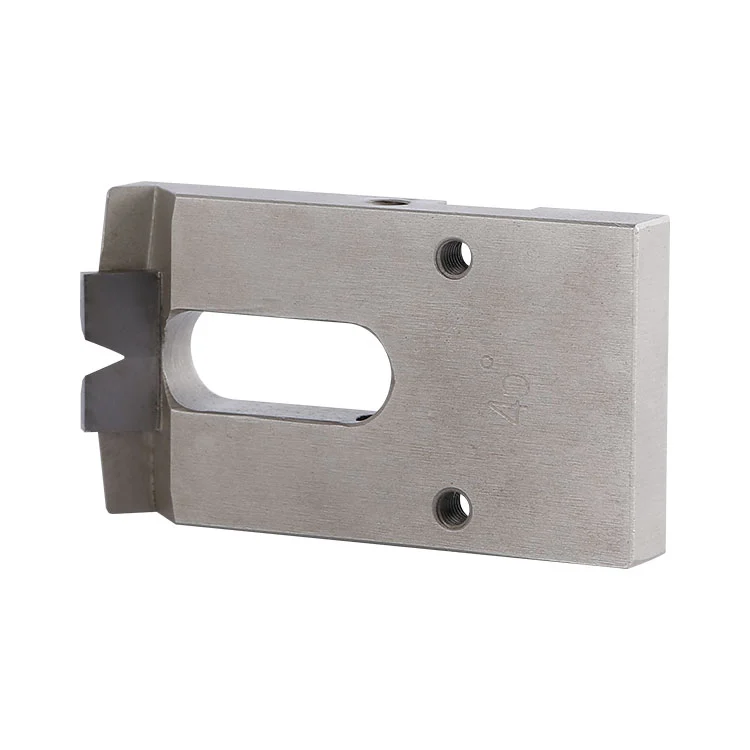
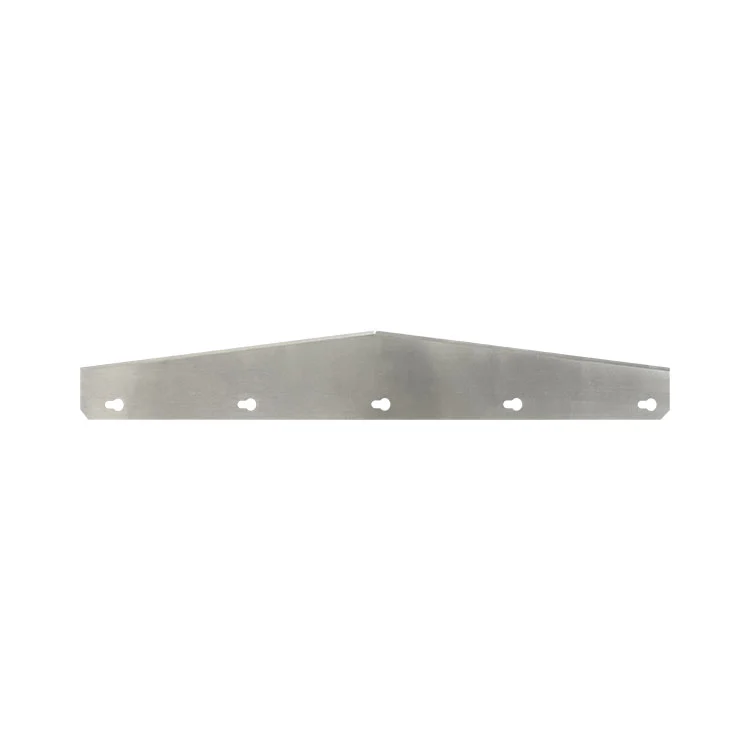
Dry film cutting blade is a special long strip cutting blade for PCB manufacturing process. The cutting edge can be selected from V-shaped apex edge or pointed edge. Multiple long round mounting holes are reserved on blade body for fixing on dry film cutting machine. It cuts the photosensitive dry film by linear feeding, achieving clean cutting and reducing dry film stretching and fuzzing. High-speed steel substrate provides outstanding chipping resistance with good fault tolerance and favorable cost, which is a common blade for PCB dry film cutting.
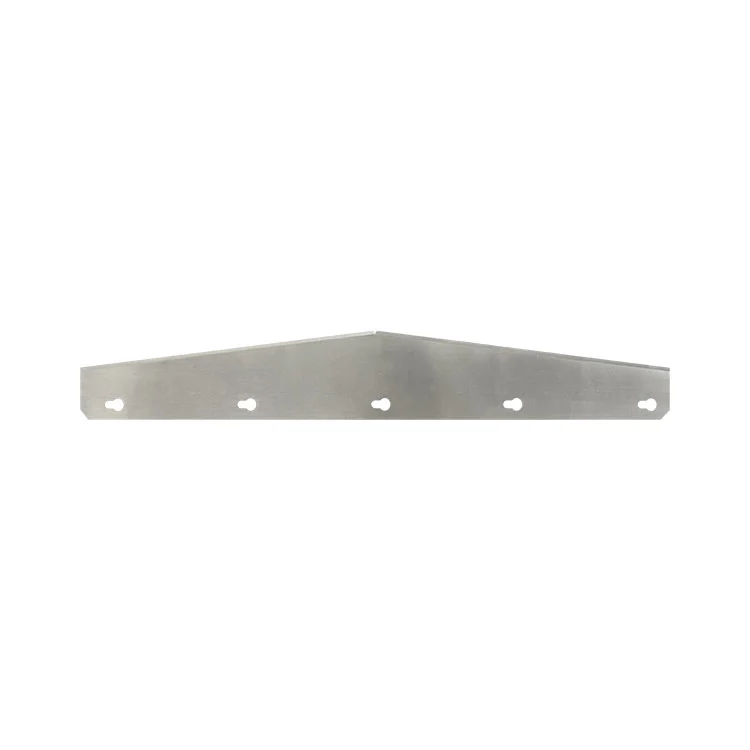
HSS Dry Film Cutting Blade: Long strip cutting blade processed with high-speed steel as substrate. The cutting edge has two optional styles including V-shaped edge and pointed edge, with adjustable long round hole mounting positions. It is installed on dry film cutting equipment for cutting and slitting PCB photosensitive dry film.
Optional V-shaped / pointed cutting edge, selectable according to different dry film thickness and equipment.
V-shaped edge: Uniform force, strong stability for long-time wide-width cutting;
Pointed edge: Lower cutting resistance at tip, less stretching when cutting thin dry film;
High-speed steel substrate with good toughness and impact resistance, not easy to chip when encountering a small amount of impurities;
High straightness of long blade for stable and consistent wide-width cutting;
Multiple long round mounting holes for front and rear fine adjustment, compatible with various cutting machines;
Clean cutting to reduce dry film debris and lower short-circuit defects of PCB circuits;
High cost performance, non-standard customization of size and edge angle available.
| Ordinal | Length(L) | Height(H) | Thickness(b) | Edge Type |
| 01 | 620/630/640 | 87/88 | 1 | V-shaped / Pointed (Optional) |
PCB circuit board: slitting and cutting of inner and outer layer photosensitive dry film;
PET film and various thin photoresist dry film wide cutting;
Dry film cutting procedure matched with PCB laminating production line.
Confirm blade edge type, dimension and mounting hole position before installation;
Fix the blade on cutting machine through long round holes and fine-tune the position;
Adjust cutting gap and feeding speed according to dry film thickness;
Carry out trial cutting to check cutting quality and adjust parameters;
Keep the cutting area clean to prevent hard impurities from damaging blade edge;
Regularly inspect edge sharpness and replace or regrind blade when edge becomes dull.
| Fault Phenomenon | Possible Cause | Quick Solution |
| Dry film has drawing marks and burrs | Cutting edge passivation, improper edge angle or excessive cutting speed | Re-grind blade, adjust edge angle and feeding speed |
| Uneven cutting width | Poor blade straightness, loose mounting | Recheck blade straightness, tighten and calibrate installation |
| Edge chipping | Hard foreign matter on dry film, collision during installation | Remove impurities, install blade correctly to avoid impact |
| Dry film stretches and wrinkles | Too small cutting clearance | Adjust cutting gap properly |
Clean blade surface and edge after daily production to remove dry film residue;
Regularly check the cutting edge for scratches, chipping and wear;
Store blades individually in protective packaging to avoid collision;
For long-term storage, apply anti-rust oil and keep in dry environment;
The worn blade can be sent back for regrinding service.
A1: V-shaped edge bears uniform force, suitable for conventional dry film and long continuous mass production with stable cutting performance. Pointed edge has low cutting resistance, which is preferred for thin dry film to reduce film stretching.
A2: Yes. HSS material supports multiple factory re-grinding. It can maintain stable cutting quality after repair and reduce tool procurement cost.
A3: Non-standard customization is supported, the total length can be customized according to the effective width of cutting machine.
A4: Common causes include dull cutting edge, improper edge angle or excessive cutting speed. Check blade edge status first.
A5: Yes, HSS blades can be reground multiple times to restore V-shaped or pointed cutting edge for continuous cutting.
Address
Building 17, Yonglida Tiansheng Industrial Park, No. 50 Gangkou Avenue, Wanjiang District, Dongguan City, Guangdong Province, China
Tel